E-Paper Magazine – The best design tips
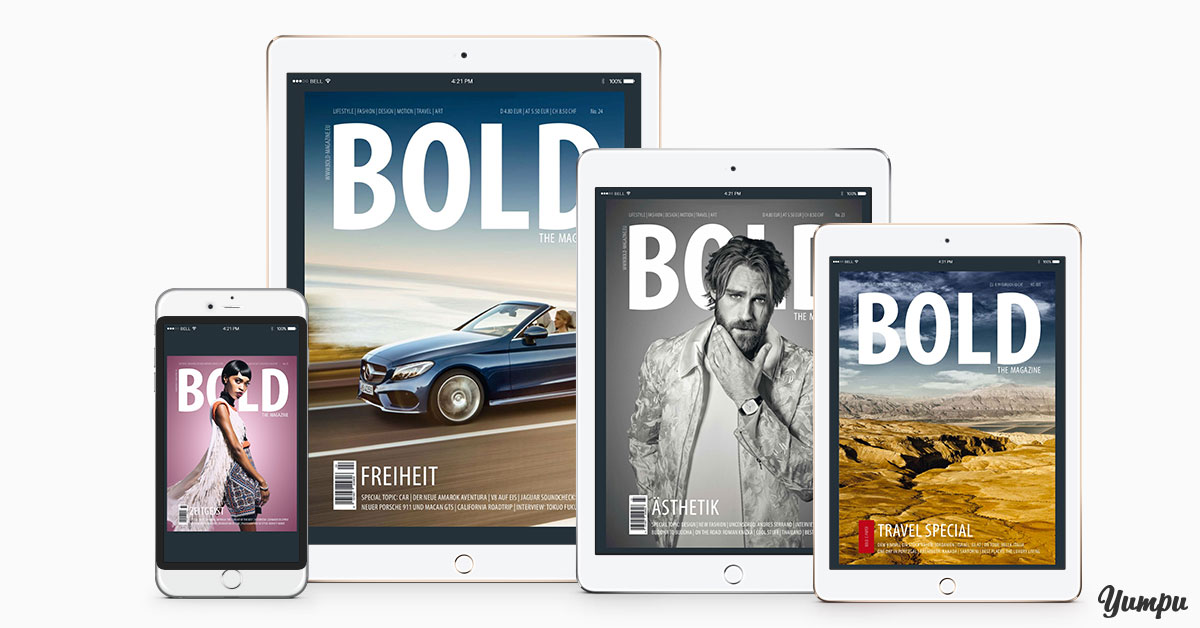
With every technical innovation comes new challenges, but also great new opportunities! This also applies to the field of digital e-paper magazines. PDF documents are usually quite large, so search engines cannot index this valuable content and thus do not get good rankings in search results. The reason is the loading time. YUMPU Publishing has developed a “rendering technology” in which the publication ALWAYS appears at the top of Google and other search engines. This technology then ensures that you get thousands of additional prospects at no additional cost. Thanks to the high-performance servers with excellent response times and the very high bandwidth that YUMPU provides, your publications always have a top loading time and are always available. This article tells you what you need to know as a publisher if you want to design your magazine, catalog, or brochure and convert it into an e-paper magazine.
Use every sense and every channel to create e-paper magazine
As human beings, we use all our senses to find our way around the world. Sight is without a doubt the most important – the human eye can distinguish millions of colors, and focus within milliseconds, and is a masterpiece of evolution. Apart from vision, hearing is another important sense for humans, with its ability to perceive sounds outside our field of vision and thus warn us of potential dangers.
Use video, audio, and text formats, web links, and social media channels to engage your reader!
Visual and auditory perception is processed naturally by the human brain as a continuous film and turned into information that can be assimilated within milliseconds. Thanks to faster and more reliable data transfer, video content is becoming increasingly popular nowadays, especially in the mobile sector.
Even the sense of touch can be engaged on mobile devices such as tablets and smartphones. Swiping through papers and magazines, as we have done for hundreds of years, comes naturally to us even in this modern environment.
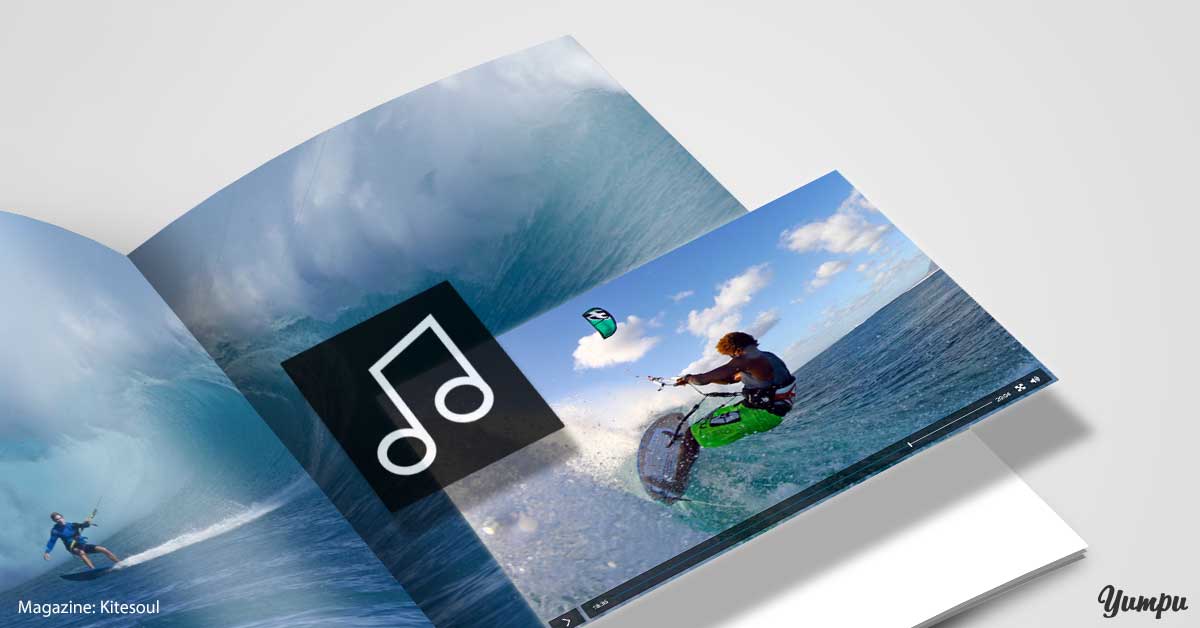
(Use video, audio and text formats, web links, and social media channels to engage your reader!)
This is why the following aspects are important to bear in mind for publishers of digital magazines:
1. Video content can be directly linked or embedded in e-paper magazines. Create icons or frames inside your publication, which can be turned into a “hotspot link” and link directly to the relevant content. The same goes for audio content such as audiobooks, interviews, or other audio information.
2. Readability: Use font sizes that are easily readable without zooming in. Don’t force your readers to squint at the screen. Create easily digestible content with large pictures and short text chunks. Remember that in a digital format, printing costs don’t factor in.
3. Less is more: Presenting fewer products on the page makes them easier to take in and provides the option of including bigger headlines and emphasizing additional text or links in the product descriptions or information displayed. Make ample use of image galleries: a picture says more than 1000 words!
4. Advertising partnerships can be strengthened! If you already include adverts for products or services in your publication, you can use these new possibilities to present your advertising partners in the best possible way with video, audio, and direct links to their websites.
5. Self-promotion in prime position – Use (the best) space in your publication to directly advertise your own social media channels and special offers (or shop). Create eye-catching title pages and don’t forget to include your contact details, internet address, and social media icons in a prominent place on the last page.
The perfect way to find new readers for your e-paper magazine!
In the past few years and months, YUMPU Publishing has developed from purely technical software to a full-fledged marketing provider. The platform offers professional and contemporary marketing in the modern world.
The distribution of page flipping style content with integrated interactive content such as video, audio, and links will become more and more important in the future, which is why we are already offering our publishers the option of converting their PDF into an e-paper magazine.
In this context, we are currently presenting the version of our video marketing tool in the “YUMPU Lab”, with which you can transform your magazine into a personalized advertising video at the push of a button. The perfect solution for sharing on social media like Facebook, Twitter, and more.
Leave a Reply
Your email address will not be published. Required fields are marked *
Comment sent successfully.
Comment could not be sent.
Welcome to YUMPU!

My name is Belinda Reiler.
I am very excited to begin my second year at YUMPU! What I really love about Yumpu.com is that everyone - without any technical knowledge - can create amazing looking online magazines!
What do we offer:
 Create flippable PDF for free
Start now and create and publish your own flippable magazine in just a few minutes!- Solutions for everyone
Create page flipping publications online. From beginners package to your own WEBKiosk and your own APP – there is a solution for everyone.
What our customers say:
"YUMPU convinced us with easy handling and a competitive price. YUMPU offers great performance and support. Other companies have to adjust to compete with it."

ALEX LENZ
40INCH.DE
"I love the whole idea of YUMPU and especially the people behind it, which I previously got to know! I am happy to recommend YUMPU."

GREGOR FILSER
TISCHLER-REISEN.DE
Satisfied customers tweet:
 We’re using www.yumpu.com for 2 months now. Their service is head and shoulders above what other ePaper websites have to offer.

 If you want your publication to look professional, visually stunning & expensive, you should consider #YUMPU free service.


I have been looking for a couple of days now at the different aspects of where to host my magazines, Yumpu.com wins all the time